Gamingforce Interactive Forums
85242 35212

Go Back   Exploding Garrmondo Weiner Interactive Swiss Army Penis > Garrmondo Network > Political Palace
Register FAQ GFWiki Community Donate Arcade ChocoJournal Calendar

Notices

Welcome to the Exploding Garrmondo Weiner Interactive Swiss Army Penis.
GFF is a community of gaming and music enthusiasts. We have a team of dedicated moderators, constant member-organized activities, and plenty of custom features, including our unique journal system. If this is your first visit, be sure to check out the FAQ or our GFWiki. You will have to register before you can post. Membership is completely free (and gets rid of the pesky advertisement unit underneath this message).


Candidates for President (mostly Ron Paul)
Reply
 
Thread Tools
Lord Styphon
Malevolently Mercurial


Member 3

Level 50.41

Feb 2006


Reply With Quote
Old Apr 10, 2007, 11:47 AM Local time: Apr 10, 2007, 11:47 AM #1 of 46
Originally Posted by Arainach
but as this is [Obama's] first term in any sort of federal position, he doesn't have any established experience.
And yet you gravitate towards John Edwards, whose established experience in federal office is a single term in the Senate.

Most amazing jew boots
Lord Styphon
Malevolently Mercurial


Member 3

Level 50.41

Feb 2006


Reply With Quote
Old Apr 10, 2007, 12:48 PM Local time: Apr 10, 2007, 12:48 PM #2 of 46
Except from what you said about Obama, you don't think he sucks at all; you're just holding his lack of experience against him.

The four years in the Senate Obama will have served in 2008 are, for all intents and purposes, close enough to the six Edwards served in 2004 to be irrelavent. Not that experience has ever mattered when talking about Edwards and high office, mind you; Al Gore considered him for vice president in 2000, just two years into his one term, and began to be seriously talked about as a presidential candidate just months later. (Of course, Obama comes to Washington with 8 years of experience in the Illinois State Senate, but that's not relavent to anything.)

You seemed to speak highly of Obama when running through candidates. If a difference of two years in the Senate is enough for you to support Edwards over him, you couldn't have been very impressed.

There's nowhere I can't reach.
Lord Styphon
Malevolently Mercurial


Member 3

Level 50.41

Feb 2006


Reply With Quote
Old Apr 11, 2007, 12:44 PM Local time: Apr 11, 2007, 12:44 PM #3 of 46
Makes me feel better about Ron Paul.
I've been thinking about a potential Ron Paul presidency, and I don't see how it could end up as anything short of a disappointment. At best. At worst, it would be an unmitigated disaster.

To be a successful president, he will have to make compromises with positions he's taken on issues while in Congress, which he could take because his proposals haven't got a snowflake's chance of being enacted anyway (and because he holds a safe seat). If he makes those compromises, libertarians who sing his praises now will turn on him, because libertarianism is a revolutionary ideology and libertarians by and large are more concerned with ideological purity than with governing. As such, deviation will be treated as apostacy by his base.

If, however, Paul tries to stick to his ideology, he will come into conflict at every turn. Chief among his opponents will be Congress, regardless of which party ends up in control. Since neither party shares the libertarian inclination to dismantle the federal government wholesale, and since Congress is Congress, appropriations bills will be passed that contains funds for things Paul disagrees with. If Paul is serious about his beliefs, he will veto these bills, as well as a great deal more of what Congress passes. Congress will eventually tire of this and vote to override his vetos on a consistent basis. (It's safe to say that Paul's own legislative agenda would be dead on arrival.) It would be the same kind of thing as happened during Andrew Johnson's presidency, and would ultimately end the same way, with Congress victorious. Paul's own ideology would demand such an outcome, even.

This thing is sticky, and I don't like it. I don't appreciate it.
Lord Styphon
Malevolently Mercurial


Member 3

Level 50.41

Feb 2006


Reply With Quote
Old Apr 11, 2007, 01:18 PM Local time: Apr 11, 2007, 01:18 PM #4 of 46
Originally Posted by Bradylama
On the other hand, if Paul was elected president it would reflect a significant shift in public opinion. It's not like libertarianism would be a tremendous deal, but people would have to be seriously distrustful of the Federal government.
Which, quite simply, they aren't. Not at the level that libertarians are. Which is good for Paul, as it means he can continue to vocalize libertarian ideology without having to worry about making it work.

Quote:
A congress that would consistantly override Paul's vetoes may not be able to sustain itself, and while the "political class" like Kennedy may be able to hold their seats the more liquid seats would be in danger of a shift.
Considering that Paul's libertarianism, if he tried to enact it, would ruffle feathers of both liberals and conservatives, Congress's position is more likely to be secure than his. While many would have no problem dismantling USA PATRIOT, how many of those would similarly have no problem dismantling something like Social Security? Besides, if Congress has to keep overriding presidential vetoes to get anything done, they'll take that message to their constituents. It only remains to be seen whether Democrats or Republicans would be the ones to benefit.

Quote:
I also don't think you've considered foreign policy much under Paul. While it's true that it's not so much in the hands of the presidency with interest groups, if we could go at least one presidential term without an act of military adventurism, I still think Paul is worth voting for.
What foreign policy? "Come home, America" is not a foreign policy, and is fundamentally unworkable in any event.

I said in my previous post that a Paul presidency would be at best a disappointment. Taking libertarianism to its logical conclusion in regards to foreign and defense policy, it would be nothing short of an unmitigated disaster.

Not that we have to worry about it.

I am a dolphin, do you want me on your body?
Lord Styphon
Malevolently Mercurial


Member 3

Level 50.41

Feb 2006


Reply With Quote
Old Apr 11, 2007, 04:47 PM Local time: Apr 11, 2007, 04:47 PM 1 #5 of 46
Quote:
If Paul continually vetoes worthless programs and unconstitutional legislation
"Worthless" and "unconstitutional" are open to interpretation. Libertarianism holds that a lot of what the government does is unconstitutional, or just plain worthless. But not everyone holds the same opinion about worth and constitutionality, and trying to dismantle a "worthless, unconstitutional" program that people want isn't going to win Paul any favors with anyone outside of the libertarian movement.

Quote:
it'd be a hard sell to the people that would have likely voted Paul into office in the first place
This assumes that all of them think the same as Paul to begin with. Simply being the Republican nominee would win him votes from certain segments, but those people aren't going to stick with him if he does things they don't like. Observe the voters who voted for George W. Bush's re-election in 2004, and who either stayed home or voted for Democrats in 2006.

Quote:
Yes, non-interventionism and free trade is a foreign policy.
Not a viable one.

The libertarian ideal on foreign policy, as voiced by Lew Rockwell and his adherents, seems to be strongly based on that of the interwar years, where non-internventionism and free trade were front and center; America left the rest of the world to do as it pleased, and made money selling things to everyone else.

One can argue that this attitude of letting the rest of the world do as it pleased was ultimately counterproductive in that it contributed to the rise of militaristic expansion on the part of Germany, Italy, Japan, the Soviet Union and others. One could also argue that the rest of the world slaughtering each other was none of our business. But that's not important right here. What is important is that in the interwar years, this was a viable policy, for three reasons: our massive military potential, our geographic isolation from any potential serious avdersary and our complete economic self-sufficiency.

The fact of the matter is that of those reasons no longer apply.

Our geographic position means less now than it did sixty years ago, as it is now possible to strike at the United States directly over long distances. Similarly, we are no longer self-sufficient economically, and import vastly more of what we use in our everyday lives, be it oil, electronics, or basic consumer goods. This is itself a result of economic factors, but as a result we have more interests overseas that require our attention.

The one of the three that still applies is military might, but libertarianism views standing armies with suspicion, which would, in turn, mean a reduction in forces. Not even allowing for the massive economic disruption that slashing the defense budget would cause, reducing our presence abroad would be conterproductive in other areas, as well. A U.S. withdrawal from East Asia, for instance, would remove the single biggest impediment to China finally retaking Taiwan (and, in the process, gaining control over the source of a significant percentage of the electronics we buy).

Quote:
Every presidency this century has been a dissapointment.
Considering that there's only been one presidency this century, this really saying too much.

Quote:
At least if Paul was President we'd have someone in office who would actually live up to the position.
If "living up" to the position was all one would need to do, that would be one thing. However, once there, a president can't just be obstinate, as Andrew Johnson learned; the American people have never stood for that (as Newt Gingrich learned), but his ideology would demand he be just that, setting him up for failure.

On the other hand, Paul could compromise with his ideology in the hopes of getting some of what he wanted done. This, though, would compell his libertarian base to turn on him, like revolutionaries frequently do to apostates, and end with their disappointment.

I was speaking idiomatically.
Lord Styphon
Malevolently Mercurial


Member 3

Level 50.41

Feb 2006


Reply With Quote
Old Apr 11, 2007, 07:44 PM Local time: Apr 11, 2007, 07:44 PM #6 of 46
Quote:
If that same leadership exists assuming Congress were to attempt to ride roughshod over a Paul presidency is it really going to be that easy?
That depends entirely on who the public percieves as the problem. If Paul is the one vetoing pretty much everything that comes to his desk, forcing Congress to override one to enact something like a budget, it's not likely that Congress is going to be the one punished.

Which would, in a twisted sense, give Paul what he wants in curtailing the executive and restoring Congress to primacy, but doing great damage to the presidency in the process.

Quote:
On the other hand, our intervention in WW1 likely lead to the rise of the Nazis where the war may have ended in stalemate.
Not that it's important to the discussion at hand, but I would instead argue that the rise of the Nazis was attributable the Entente imposing the terms on Germany that it did when it did (breaking the German army in the field would have given them more leverage to dictate terms without giving Germany the recourse of saying they were stabbed in the back). I've also said in the past that barring American intervention, the likely result would have been German victory.

Of course, in a below point you talk about trade being unimpeded, and that we should be prepared to use force to protect shipping lanes and trade. German disruption of trade via its submarine campaign would have in turn compelled military intervention anyway.

It should also be noted that part of what helped the U.S. maintain its isolation between the world wars was the simple fact that we had been on the winning side in the first one. Not a critical one, but it helped make our absence felt.

Quote:
The cause of the war is itself enough cause to avoid entangling alliances
By entangling alliances, do you mean that, or do you mean alliances period, because they're not the same thing, and too many isolationists act as if they were.

Quote:
We did, after all, possess a strong navy in the interwar years despite the public disillusionment with the outside world.
While this is true, it comes with the caveat that its dominance wasn't unchallenged, and that its strength was partly illusory. While this isn't entirely our fault, as the Japanese began planning for a confrontation with the United States even before World War I ended, it still represents something worth considering. Also, because of the above factors, the Navy wasn't funded as well as it could have been. To ensure naval dominance, and through it power projection and trade security, requires a massive investment, and that may be more than many libertarians are willing to accept.

Quote:
I would argue that our geographic position is significant, as no country in the world is capable of the kind of force projection that we are, and while China is constructing its own Blue Water navy, it'd still have to compete with the USN and China itself is flimsier than it would have us believe. The Party constantly teeters on the edge attempting to end a popular revolt, and attempting to commit their own resources to threaten American interests would stretch them too far.
I can't say I entirely agree with your assessment of Chinese weakness. While I don't think China is the new superpower everyone thinks it is, it is hardly teetering on the edge of collapse (in part because it used force when the rest of the Communist Bloc refused to). Also, China traditionally has only concerned itself with its immediate area and left the world to its own devices.

Of course, this entangles us with them, since we have major interests of our own in Taiwan.

Quote:
What can strike the United States over a long distance are ballistic missiles, yet we already possess the most significant nuclear deterrent on the planet.
This is still a major development over the interwar years, when nothing could reach us, and something we must take into account, as well as people who are not concerned by our own nuclear deterrant.

Further, the rise in international travel increases the risk of danger coming in undetected via that route. As much as we can all mock Homeland Security, terrorism is still a real danger, and a viable way to strike at the United States.

Quote:
As for the imports issue, America is most certainly self-sufficient in the sense that we can produce enough food to feed the country. While the standard of living may drop due to some foreign crisis, the danger of involving ourselves in a commitment we can't back out of is even more potentially damaging due to the loss of lives, materiel, and capital.

Assuming it was unimpeded, the market sustains itself, and in a situation where the global situation makes it harder to attain goods from abroad, market forces act to encourage self-sufficiency.
Unfortunately for this model, oil is in many ways independent of it, simply by virtue that we need it. Oil is critical to modern civilization. That food that we produce is all so much rat fodder if it can't be transported to the population centers, for instance, and that requires fuel. Even removing fuel uses, oil is still used for things like plastics and synthetic fibers.

As long as we need oil, and can't supply all that we need ourselves (which we haven't been able to do for a long time), we will not be economically self-sufficient and it will force us to invest resources (of one kind or another) in securing supplies of oil.

Quote:
Any disruption caused by a slashing of the defense budget would only be temporary, as the freed resources become allocated to more efficient uses. That is, of course, assuming that we're talking about the libertarian ideal where government is actually scaled back instead of a liberal ideal where the funds going into defence would be allocated to another inefficient government program.
We're talking about neither, actually. What we're talking about is the economic disruption that would be caused by cutting funds.

When Congress allocates money to defense, it doesn't just sit in the Pentagon; the Pentagon spends it on various things which it buys from outside companies. Aircraft, for instance, come mainly from three companies: Boeing, Lockheed Martin and Northrop Grumman. These three are the giants of the American aerospace industry, and all are dependent on Defense Department contracts for the majority of their revenue. Any major cut in defense spending would hurt companies like them immensely, forcing them to layoff thousands of their employees.

Since those employees would now not be spending their huge salaries on things, that will spread disruption throughout the economy, causing other people to lose their jobs.

It would also result in the effective end of the American aerospace industry. Northrop Grumman also controls most military shipbuilding in this country (which, by and large, is all the shipbuilding we still do here), so any loss in revenue they face will harm that industry, too, and cause still more disruptions.

And finally, since military equipment is a significant part of what we export, serious losses felt by defense contractors would bring down that part of the economy, too.

(I can't help but feel I've had this conversation before.)

Quote:
I agree, however there is no good reason to maintain a presence in Europe and South Korea. The maintenance of bases and personnel there act as a moneysink, as no European nation is under threat of communist invasion, and the South Koreans are more than capable of demolishing any North Korean aggression on their own.
As both Europe and South Korea are major trading partners of the United States, it could be argued that it is in our interests to make sure of their security.

Also, South Korea still has to be concerned about China to some extent, and Europe still serves as a forward base for American forces if they need to be deployed elsewhere, such as the Middle East.
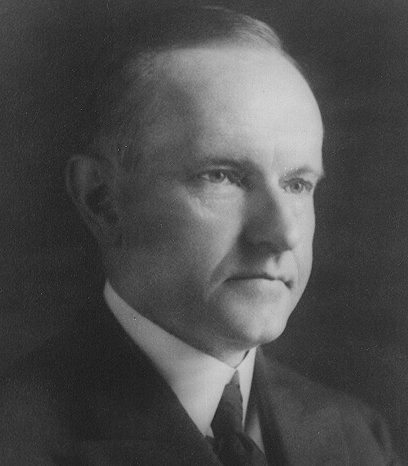
Quote:
100 years, you know what I mean.
Why do you hurt Silent Cal's feelings?


I'll bet he never says another word to you again.

Quote:
political libertarians are already consigned to the fact that they have to compromise in order to affect their agenda.
I have serious doubts about that, if the Libertarian Party is any guide to go by. They, at least, seem to be more concerned about ideological purity than in attracting attention to their cause. Their selection of Michael Badnarik as their presidential nominee over someone like Aaron Russo, who, being independently wealthy, could have concievably attracted more attention, and with that more votes and members.

This isn't restricted to the Libertarians, though; the Greens could be said to have made the same mistake in selecting Cobb over Nader.

This may also be why Paul isn't even bothering with them this time.

What kind of toxic man-thing is happening now?
Reply


Exploding Garrmondo Weiner Interactive Swiss Army Penis > Garrmondo Network > Political Palace > Candidates for President (mostly Ron Paul)

Forum Jump


All times are GMT -5. The time now is 06:04 AM.


Powered by vBulletin® Version 3.8.9
Copyright ©2000 - 2026, vBulletin Solutions, Inc.